
Turnkey Villas in Bali: What Fully Furnished Covers
What "turnkey" and "fully furnished" should mean in a Bali listing: the joinery, furniture, appliances, textiles and pool equipment the specification should name, how to check it at handover, and how replacement is funded.

A turnkey villa in Bali should arrive at handover ready to live in or to rent from the first night: finished surfaces, built-in joinery, loose furniture, appliances, textiles and a pool that is filled, filtered and running. The trouble is that "turnkey" and "fully furnished" are marketing words, not legal terms. Two listings can use the same phrase and mean very different things. The protection is a written specification attached to your purchase agreement, an itemised inventory checked against it at handover, furniture made for a climate where the air stays humid all year, and a clear answer to who pays when that furniture wears out.
What does "turnkey" mean in a Bali listing?
In practice, sellers in Bali use three levels of finish, often without saying which one they mean. A "shell and core" or semi-finished unit has the structure, roof and rough services, and the buyer fits out the interior. A "finished" unit has floors, wall finishes, bathrooms and a kitchen, but no loose furniture or appliances. A turnkey or fully furnished unit adds the furniture, appliances, textiles and equipment needed to occupy or let it immediately.
The gap between the second and third level is where most disappointments happen. A listing may say "furnished" and deliver beds, a sofa and a dining table, while the buyer expected a washing machine, kitchen equipment, curtains, outdoor loungers and pool cleaning gear. The dispute is rarely about honesty; it is about a document that was never written. If the seller cannot give you an itemised specification before you pay, assume the word "turnkey" covers less than you think.
What should a fully furnished specification list?
The hospitality industry calls this scope FF&E: furniture, fixtures and equipment, the movable and replaceable contents of a property as opposed to its structure. A useful specification for a Bali villa or apartment groups FF&E so that nothing falls between trades. Each line should name the material or brand, the model where there is one, the quantity and the room.
Group | What the specification should name | What to check at handover |
|---|---|---|
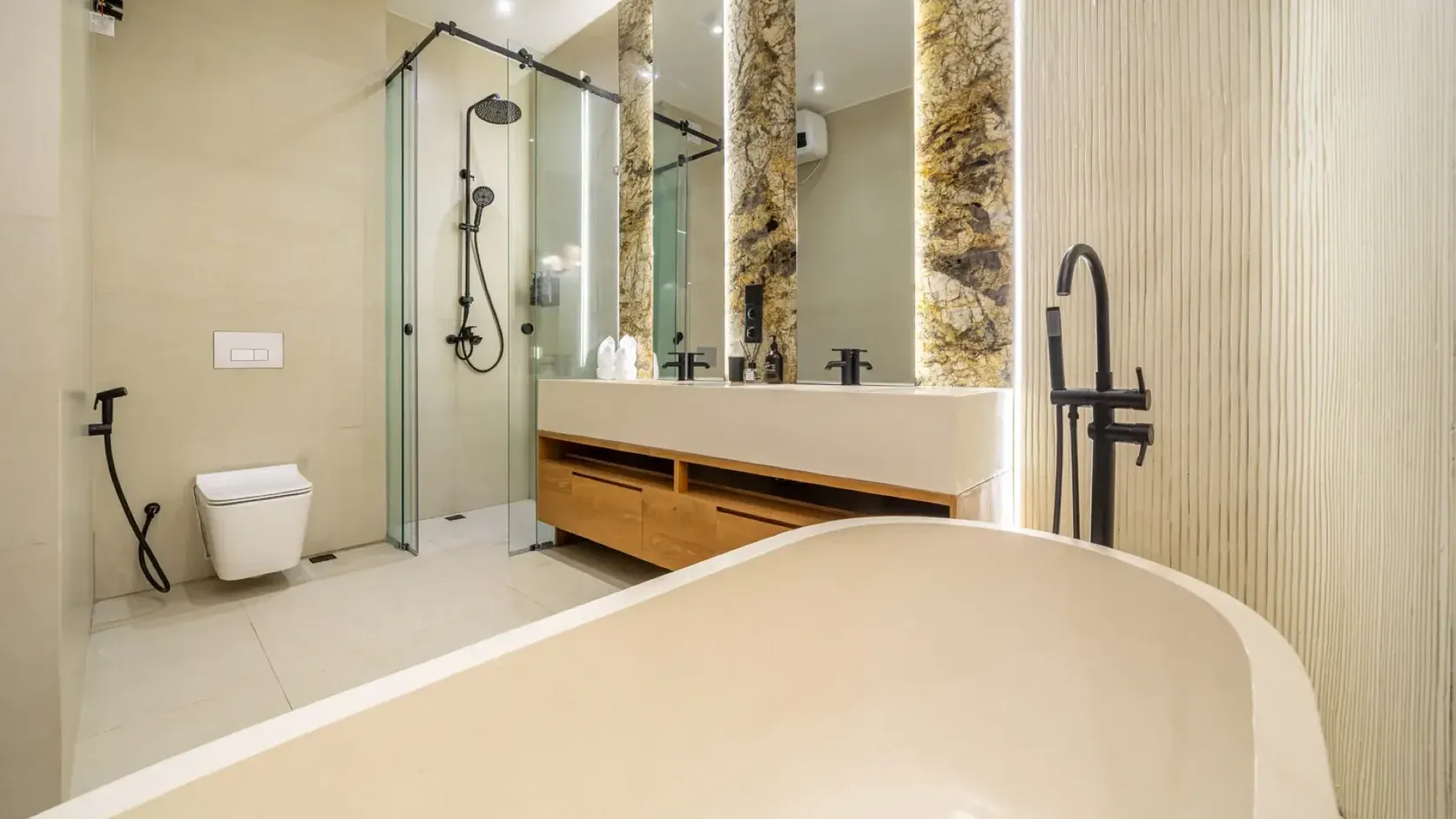
Built-in joinery | Wardrobes, kitchen cabinets, vanity units, headboards and wall panelling: carcass and door material, timber species, hardware brand, finish | Doors close square, drawers run freely, no gaps at walls and ceilings, ventilation behind units on external walls |
Loose furniture | Beds and mattress size, sofas, dining and outdoor sets, desks: frame material, upholstery fabric, quantity per room | Count against the inventory, frames rigid, fabrics as specified, outdoor pieces rated for outdoor use |
Appliances | Kitchen equipment, laundry, water heaters, air conditioning, TV and Wi-Fi equipment: brand and model number | Every unit switched on and run, model numbers match, manuals and warranty cards passed to the owner |
Textiles and soft furnishings | Curtains and blackout linings, bed linen, towels, cushions, rugs: number of sets per bed and per bathroom | Curtains operate and close fully, linen sets complete, fabrics suited to frequent washing |
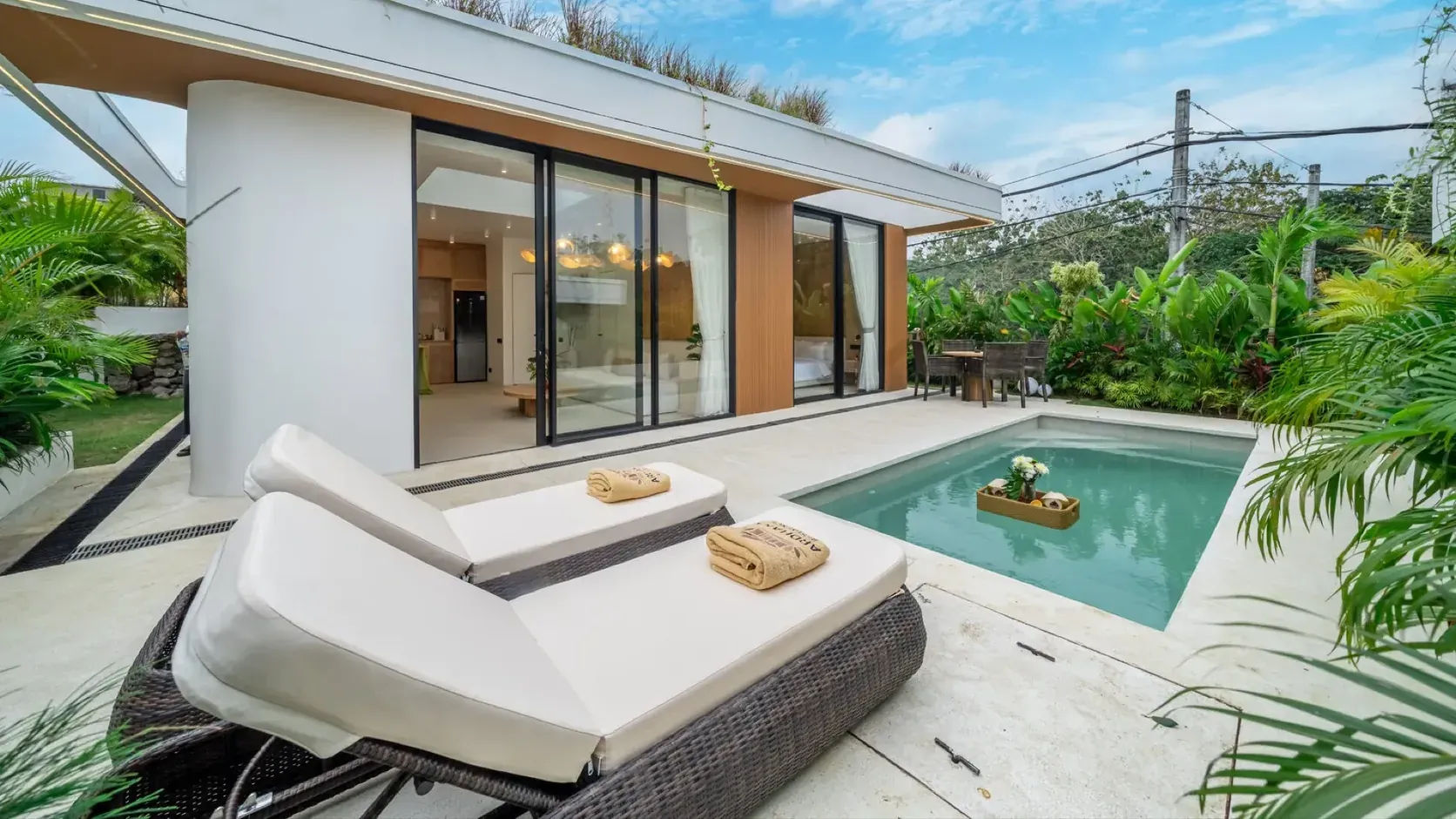
Pool and outdoor equipment | Pump, filter, dosing or chlorination system, lighting, cleaning kit, loungers and umbrellas | Pool running clear, filter and pump commissioned, water test recorded, cleaning kit on site |
Two lines are often missing. The first is operating supplies: kitchenware, glassware, cutlery, hangers and bathroom accessories. The second is the boundary with the operator. If the unit will be rented through a management company or a hotel brand, ask for the operator's own fit-out standard and confirm that the specification meets it, so you are not buying a second round of furniture in the first year.
How do you compare the specification with the finished unit?
The handover inspection is the one moment when every item is new, visible and still the developer's responsibility. Treat it as a structured walk, not a viewing.
- Bring the specification and the inventory, and go room by room. Tick each line, note quantity, material and model, and photograph anything that differs.
- Run every appliance and every air conditioning unit. Open every door and drawer. Fill a basin and a bath and watch them drain.
- Read the model plates. A substituted appliance may be perfectly good, but it should be your decision, and it should be recorded.
- Collect manuals, warranty cards and the supplier list. They are needed for repairs and they belong with the property if you sell it.
- Write every defect on the handover act or a signed snag list with a date for correction. A defect not recorded at handover is harder to attribute later.
Ask also what the finishing warranty covers and for how long. At HQC it is a 12-month warranty on the interior finishes of all premises, alongside a 10-year warranty on load-bearing structures and the pool shell. A warranty only works if the starting condition is documented, which is another reason the handover record matters.
Why does furniture made for a humid climate matter?
Bali is humid every month of the year, not only in the wet season. The annual climate bulletin of the Bali Climatology Station (BMKG) shows, at its station in Jembrana, monthly average relative humidity between 83 and 87 (on the 0 to 100 scale) in every month of 2022, with monthly maxima reaching the mid nineties. A villa that is shut for weeks between guests, or cooled hard by air conditioning and then opened to the garden, puts its furniture through constant swings of moisture.
Wood responds to that air. The US Forest Products Laboratory Wood Handbook explains that wood gains or loses moisture until it reaches equilibrium with the temperature and humidity around it, and its table shows the scale of the difference. At about 27°C and the humidity recorded in Bali, wood settles at roughly 17 to 19 parts of water per 100 parts of dry wood. In a heated room in a temperate winter, at 21°C and a relative humidity of about 40, it settles at around 8. Furniture dried and built for a temperate home will therefore take on water in Bali and swell; furniture assembled from timber that is not yet in equilibrium will move after delivery. The Handbook also notes that varnish, lacquer and paint slow these changes but do not prevent them.
In a specification, that means:
- Timber should be dried for the conditions it will live in and stored on site before final assembly, so it moves in the workshop and not in your bedroom.
- Joinery should allow for movement: panels that float in their frames, shadow gaps at walls, doors hung with tolerance.
- Wardrobes and cabinets on external walls need ventilation behind and beneath them, or mould will find the dead air.
- Hardware and fixings should resist corrosion, particularly within reach of sea air.
- Upholstery and outdoor fabrics should dry quickly and tolerate frequent washing, which a rental property will demand.
Provenance matters too. Indonesia operates a mandatory timber legality system, the SVLK (Sistem Verifikasi Legalitas Kayu), which traces timber from its source through processing and trade so that wood products can be shown to come from legal sources. It is reasonable to ask the maker of your furniture where the timber comes from and how its legality is documented.
What should be checked on the pool and its equipment?
A private pool is part of most turnkey villa offers in Bali, and it is equipment as much as finish. Indonesia's environmental health regulation, Minister of Health Regulation No. 2 of 2023, sets quality standards for swimming pool water, including pH, alkalinity and residual chlorine, and requires that pool water be recirculated. Its health requirements, such as showing test results to visitors, are written with public pools in mind; a villa that hosts paying guests is well advised to run its pool to the same discipline.
At handover, ask for the pump and filter model, the type of disinfection, the commissioning record and a first water test. Confirm who maintains the pool after handover and how often the water is tested. The pool shell is structure; the pump, filter and dosing equipment are FF&E with a shorter life, and they belong on the replacement plan.
How is furniture replacement funded over time?
Furniture in a rental property wears faster than in a home. Hotels have long treated this as a budget line rather than a surprise. As HVS describes for hotel management contracts, furniture, fixtures and equipment must be replaced at regular intervals, so a sinking fund is set up to accumulate capital for that replacement, usually as a share of gross revenue. A DLA Piper survey of hotel management agreements across many countries finds the same practice almost everywhere, often starting low in the first years and rising as the property ages.
Indonesian tax rules point in the same direction. Under Minister of Finance Regulation (PMK) No. 72 of 2023, tangible non-building assets are depreciated over a useful life set by group. The regulation's annex places wooden and rattan furniture in the shortest group, with a useful life of four years for tax purposes, and metal furniture and air conditioners in the next, at eight years. These are accounting conventions rather than predictions, but they are a fair reminder that furniture is not part of the long-lived structure you are buying.
For a buyer, the questions are simple. Is replacement planned and funded, or left to the owner to discover? Who decides when an item is worn out? Who carries out the repair? At HQC, each property's financial model includes an allocation for depreciation that covers both ongoing repairs and the planned replacement of furniture in the future. The management company monitors the condition of properties in rental operation and carries out repairs itself, so most faults are fixed before an owner hears of them.
How HQC delivers a turnkey unit
HQC is a full-cycle developer: the legal land audit, design, construction, MEP, furnishing and hotel management sit with one company. Joinery, beds and casegoods are produced in our own 4,000 m² furniture factory, so the interior is designed, made and installed by the same organisation that builds the structure. You can see how the factory fits into the build sequence on our quality page.
- Aravita: villas come fully finished and furnished, with in-house construction, MEP, joinery and furniture.
- Bloom: residences come turnkey, finished, furnished and equipped, ready for the operator to take over.
- Black Rock: Villa #2 comes turnkey with furniture, appliances and a private filtered pool.
- Dzen: furniture and appliances were included on handover.
Whether a furnished villa, a serviced apartment or a hotel room suits you better depends on how you plan to use and let it. We compare the three formats in Villa, apartment or hotel room in Bali.
Frequently asked questions
Is "fully furnished" defined by Indonesian law?
No. It is a commercial description. The scope you receive is the scope written into the specification and inventory attached to your agreement, so ask for both before you pay a deposit.
What should a turnkey villa include?
Built-in joinery, loose furniture, appliances, textiles and soft furnishings, and pool and outdoor equipment, each line with a material, a brand or model and a quantity, plus operating supplies such as kitchenware, glassware and bathroom accessories.
Why does humidity matter for villa furniture in Bali?
Bali is humid all year: the BMKG Bali Climatology Station recorded monthly average relative humidity between 83 and 87 in every month of 2022. Wood gains moisture until it matches the air around it, so furniture dried for a temperate home swells here, and joinery needs to allow for movement and ventilation.
How do I check the furniture at handover?
Walk the unit room by room with the specification and the inventory, run every appliance and air conditioning unit, read the model plates, collect the manuals and warranty cards, and record every defect on the handover act or a signed snag list.
What warranty covers furniture and finishes?
It depends on the developer and the supplier. At HQC, interior finishes of all premises carry a 12-month warranty; appliances also carry their manufacturers' warranties, which is why the warranty cards should come with the unit at handover.
Who pays to replace worn furniture in a rental villa?
Ultimately the owner, either directly or through a reserve set aside from rental income under the management agreement. The better arrangement is a planned one. In HQC properties the financial model includes a depreciation allocation that covers ongoing repairs and the planned replacement of furniture.
See the specification before you see the show unit
A show unit tells you how a property can look. The specification tells you what you will own. Ask the HQC team for the furnishing specification of the project you are considering, and for a visit to see joinery and furniture in production.
Continue reading
Villa Handover Inspection in Bali: A Snagging Checklist
Water in a Bali Villa: Supply, Storage and Filtration
