
Villa Handover Inspection in Bali: A Snagging Checklist
The last step of an off-plan purchase in Bali: what to test at handover room by room, how to record defects so they get fixed, how the structural and finishing warranties run, and how an owner abroad gets the same evidence.
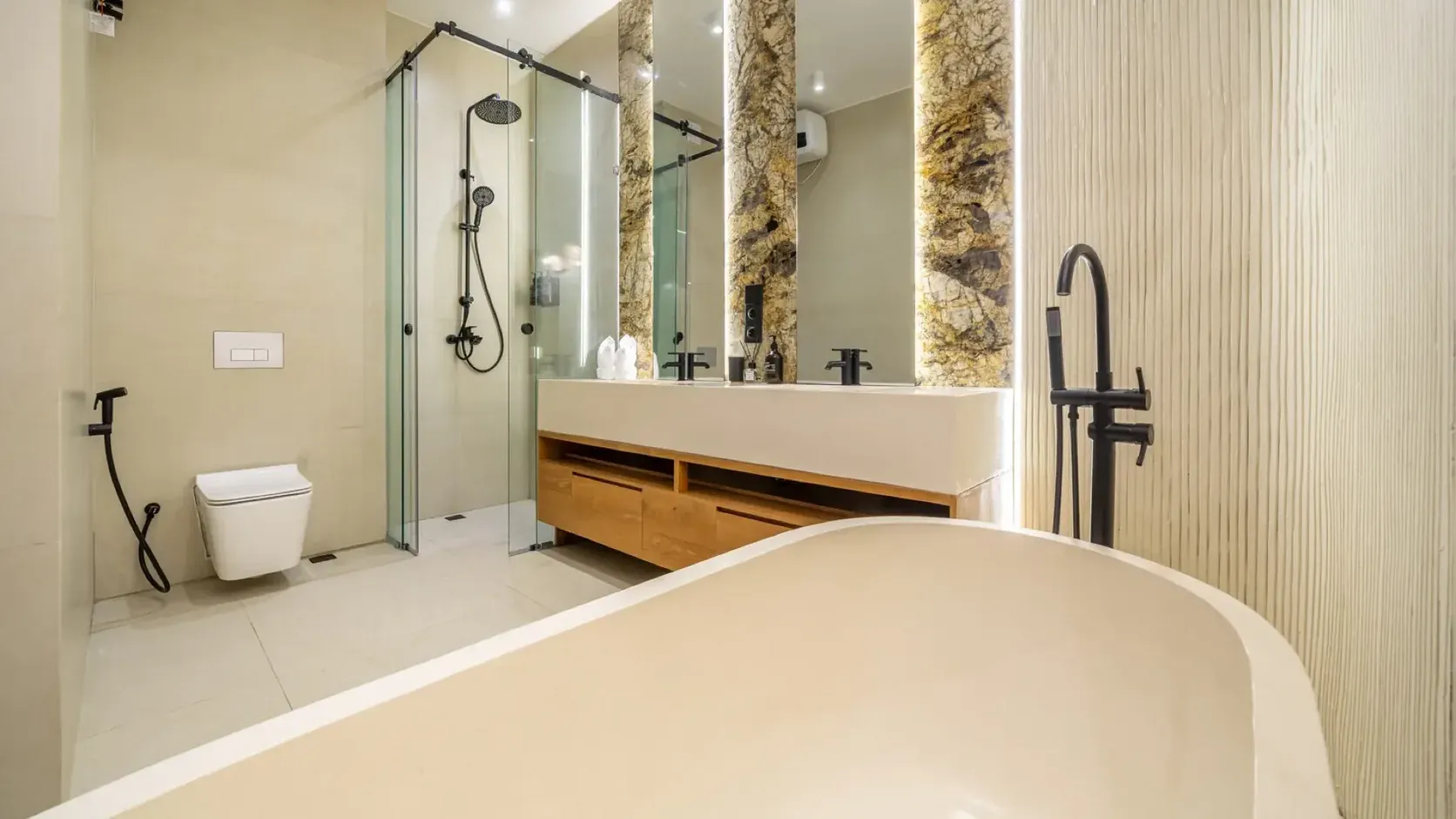
A villa handover inspection, often called snagging, is the last step of an off-plan purchase in Bali and an easy one to rush. It is a room-by-room check, made before you sign the handover record, for anything that is unfinished, damaged or different from the specification. The defects that matter are the ones water, power and daily use will expose within months. Find them while the builder is still on site, write them down, and agree a date for each fix.
What is a handover inspection, and when should it happen?
It happens once construction and fit-out are finished and before the developer hands over the keys. In Indonesian practice, the moment is recorded in a handover document (berita acara serah terima), and that signature matters: it marks the end of construction and, in most contracts, the start of the maintenance (defects) period. For houses sold under a preliminary sale agreement (PPJB), Article 22J of Government Regulation 12 of 2021 requires the agreement to set out, among other things, the time of handover and the maintenance of the building. Leasehold contracts are structured differently, but find the same two clauses in yours.
Two documents should also exist at this stage. A building needs an SLF certificate of functional fitness before it is used: Government Regulation 16 of 2021 defines the SLF as the certificate the regional government issues to declare a building fit for its function before it can be used. The second is the specification you bought: without the finishing schedule and furniture list, a missing item is a matter of opinion.
Before the walk-through: what to bring
- The contract specification, the finishing schedule and the furniture and equipment list, ideally as a printed checklist.
- The floor plan, so each defect can be marked by room and wall.
- A small socket tester, a spirit level and a marble or a bottle of water to check falls.
Ask for the water, power and air conditioning to be on, and for the pool to be filled at least a day before. A dry villa hides most of the defects that matter.
The snagging checklist, room by room
Wet areas: bathrooms, showers and the kitchen
Run each shower for several minutes and watch where the water goes. It should run to the drain without pooling, and nothing should escape past the shower screen or threshold. Pour water near the walls of the bathroom floor to check the fall. Look for gaps in silicone joints, hollow-sounding tiles (tap them) and missing grout. Fill and release each basin and bath, and check under the vanity for drips. Confirm hot water at every outlet and that each extractor fan pulls air. In the kitchen, check under the sink with a torch and open every cabinet.
Drainage, roof and outdoor areas
Bali drainage is tested by the wet season, not by the inspection, so simulate it. Hose down terraces and the pool deck and watch the water reach the drains. Check that downpipes discharge away from the building and that ceilings under balconies show no stains. Timing matters here: for the 2025/2026 season, the Bali provincial disaster agency reported BMKG's forecast that the rainy season would arrive across Bali in stages between September and November 2025, with its peak in January and February 2026. The pattern is typical, but the exact months shift from year to year. A villa accepted in the dry months should be checked again after the first heavy rains; see also what the tropical climate does to buildings.
Doors, windows and glazing
Open and close every door, sliding panel and window, and lock each one. They should move without force, close flush and not rub on the frame or floor. Look at seals and the joint between frame and wall for gaps, which in heavy rain become leaks. Check glass for scratches and chips, and note missing handles, stoppers and insect screens: small items are easy to leave for later.
Electrics, air conditioning and water systems
Test every socket with the tester and every switch, including outdoor and pool lighting. Press the test button on the residual-current breaker in the distribution board: it should trip at once and reset cleanly. The board should be labelled circuit by circuit. Run each air conditioning unit for long enough to cool the room, and check that its condensate drains outside rather than dripping down a wall. Check water pressure with several outlets open at once, and ask for the manuals and warranty cards for each appliance and system.
The pool
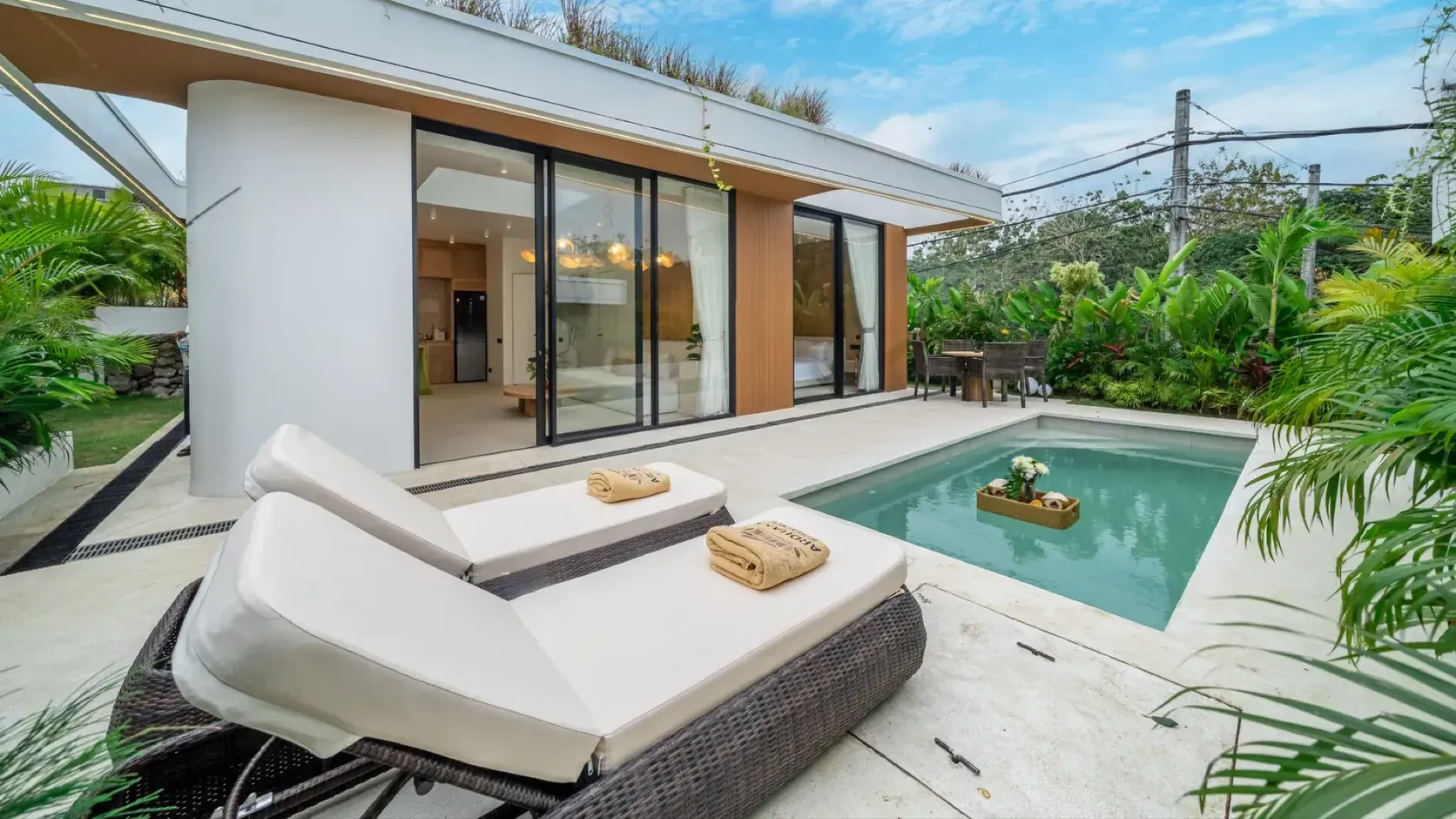
Look at the shell and tiles for cracks, loose or sharp tiles and uneven grout lines. Mark the water level with tape and check it again a day later: an unexplained drop is worth investigating before handover, not after. Run the pump and filter, test the lights, and check that the deck drains away from the pool.
Furniture, fittings and finishes against the specification
Walk the furniture list item by item: present, the right model and finish, undamaged, and assembled correctly. Check joinery for alignment, paintwork in daylight, and floors for chips and scratches from the furniture move-in. Cosmetic marks still belong on the list: they are quick to fix while the finishing crew is on site.
Area | What to test | Common defect |
|---|---|---|
Showers and bathrooms | Run water; check falls, silicone, grout, under-basin pipes | Pooling water, failed seals, slow drains |
Terraces and roof edges | Hose down; watch water reach the drains | Water standing against walls or doors |
Doors and windows | Open, close and lock each one; inspect seals | Binding frames, gaps at the frame-to-wall joint |
Electrics | Every socket and switch; test the residual-current breaker | Dead outlets, unlabelled circuits, nuisance tripping |
Air conditioning | Run each unit; check condensate drainage | Condensate dripping indoors or down a facade |
Pool | Mark the level, recheck after a day; run the equipment | Unexplained water loss, loose tiles |
Furniture and fittings | Check item by item against the written schedule | Missing or substituted items, transport damage |
How to record defects so they get fixed
A defect that is not written down did not happen. Give each item a number, the room and the wall or fitting, a short description and a photo that shows both the defect and enough of the room to find it again. Sort the list into three groups: safety (electrical faults, loose glass, trip hazards), function (leaks, drainage, doors that do not close) and cosmetic (marks, scratches, paint). Agree a fix date and a re-check date for each item, and have both sides sign the list and attach it to the handover record.
How the warranty clock works: structure and finishes
Indonesian construction law treats two periods differently: liability for building failure, and the maintenance period the contract sets. Article 65 of Law 2 of 2017 on Construction Services makes the contractor liable for building failure for the planned service life of the construction and, where that life is longer than 10 years, for a maximum of 10 years from the date of final handover. The period must be stated in the construction contract. Government Regulation 14 of 2021 defines building failure as the collapse of a building or its failure to function after final handover.
Finishes, fittings and equipment fall under a shorter, contractual period, often called the maintenance or defects period. The same law requires a construction contract to state the period of maintenance that is the contractor's responsibility (Article 47), but leaves its length to the parties. For houses sold under a PPJB, the 2019 Public Works and Housing Ministry regulation on preliminary sale agreements set a minimum of three months from the signed handover record, with the developer bearing the cost of repairs; that regulation has since been revoked and replaced by Government Regulation 12 of 2021, so read the period your own contract gives you. Check which handover each clock runs from: in construction contracts the maintenance period usually starts at the first handover, while the Article 65 period runs from the final handover, which can come later. Defects visible at handover belong on the snag list, not in a later claim.
Inspecting from abroad: how a remote owner gets the same evidence
Many Bali buyers never attend the handover in person, and the inspection can still be thorough. Ask for a continuous video walk-through rather than a set of edited clips: one take per room, following your checklist in order, with water running, doors opened and closed, and each socket tested on camera. Ask for the date to be stated at the start, then the signed defect list and a second video once the fixes are done. For an independent view, appoint an inspector or a representative with a power of attorney and give them this checklist and your specification. Signing the handover record can wait until you have seen the evidence.
The earlier stages of the purchase have their own checklists. Risk before you pay is covered in our guide to buying off-plan property in Bali, the documents to check before signing in the due diligence checklist, and the full sequence in how to buy property in Bali as a foreigner.
How HQC approaches handover
Quality control at HQC runs in three stages: engineering, finishing and the operator handover inspection. The last stage is a final review to the hospitality operator's brand standard before handover, so a unit performs to the flag it carries from day one. Throughout, regular technical inspection is documented in photo and video at every key stage before a key changes hands. The detail is on our quality page.
Every contract carries a 10-year warranty on load-bearing structures and the pool shell, and a 12-month warranty on the interior finishes of all premises. Around four in five of our transactions are completed entirely remotely, and the document set an investor receives includes the documents confirming handover of the property on completion of construction. After handover, repairs are handled by the management company; the exact procedure depends on the complex, but the property is in rental operation, its condition is monitored, and as a rule the owner never learns of a fault because it has already been fixed. More answers are in our FAQ.
Frequently asked questions
What is a snagging list?
A snagging list is a written record of the defects found at handover: unfinished work, damage and anything that differs from the specification. Each item gets a number, a location, a photo and a fix date, and the list is signed by both sides and attached to the handover record.
What should I bring to a villa handover inspection?
The contract specification, the finishing schedule and the furniture and equipment list, the floor plan to mark each defect by room, and a socket tester, a spirit level and a marble or a bottle of water to check falls. Ask for the water, power and air conditioning to be on and the pool filled at least a day before.
What should I check first at a villa handover in Bali?
Start with water. Run every shower, tap and drain, hose down the terraces and check that water falls to the drains. Wet-area defects are among the costliest to put right later.
Can I do a handover inspection remotely?
Yes. Ask for a continuous, dated video walk-through that follows your checklist, a signed written defect list and a second video after the fixes. For an independent view, appoint an inspector or a representative with a power of attorney.
When does the warranty start on a new villa in Bali?
From a handover date set in your contract, so check which one it uses and keep the signed handover record. Under Law 2/2017, the contractor's liability for building failure runs for up to 10 years from final handover where the planned service life is longer; finishes are covered for a shorter maintenance period set by the contract.
What is the difference between a structural warranty and a finishing warranty?
A structural warranty covers the parts that keep the building standing, such as the foundations, frame and load-bearing walls, and in some contracts the pool shell. A finishing warranty covers surfaces, fittings and fixtures that wear with use, and runs for a much shorter period. At HQC the terms are 10 years and 12 months.
See how we build before you buy
Ask us how inspections are documented on the project you are considering, and to see completed work. Talk to the HQC team, and we will walk you through it.
Continue reading
Water in a Bali Villa: Supply, Storage and Filtration

Turnkey Villas in Bali: What Fully Furnished Covers
