
Bali Villa Rental Income: How to Read a Forecast
Every Bali villa rental income forecast rests on a handful of assumptions. Which ones move the result, how pooling changes what you receive, and the questions that expose an optimistic model.

In brief: nobody can honestly tell you what rental income a Bali villa will earn without showing you the calculation. Every forecast is a chain of assumptions: which unit and which period it covers, how many nights are sold, at what average nightly rate, and what is deducted before money reaches you. Change one link and the result moves. The useful question is not "what will I earn?" but "what does this forecast assume, and what happens when those assumptions are less kind?" This article walks through each assumption and the questions that test it.
What rental income can I expect from a villa in Bali?
The honest answer is that it depends on the specific unit and on assumptions you can check. Statistics Indonesia (BPS) for Bali publishes room occupancy every month and reports star-rated hotels and non-star accommodation as two separate series, at different levels. Both series move from month to month, as its releases for August 2025 and April 2026 show.
This is why we say on our Why Bali page that a meaningful forecast identifies its unit, period and operating assumptions, and that market averages do not establish a promised outcome for any particular residence. The rest of this article explains what those assumptions are and how to test them.
The two drivers: occupancy and average nightly rate
Hotel analysts describe room revenue with three linked measures, defined in the STR glossary published by CoStar: occupancy (rooms sold divided by rooms available), average daily rate or ADR (room revenue divided by rooms sold) and RevPAR (room revenue divided by rooms available). The same logic applies to a villa. Revenue is the number of nights sold multiplied by the average rate those nights achieved.
Two questions follow. First, what is the denominator? Occupancy measured against 365 nights is a different number from occupancy measured against the nights left after owner stays and maintenance closures. Second, is the nightly rate a list rate or the average actually achieved? Achieved rates include discounts, long-stay reductions and low-season offers. A forecast that pairs high-season rates with year-round occupancy is combining two figures that rarely occur together.
Questions to ask about the drivers
- Which unit, which room category and which twelve months does the forecast describe?
- Is occupancy measured against all nights in the year or only against nights available for sale?
- Is the nightly rate an achieved average or a published rate, and does it vary by season in the model?
- What comparable properties were used to set both figures, and can you see their actual results?
What sits between guest revenue and your payout
Gross revenue is not what you receive. Each layer below is a legitimate cost of running a rental property; the question is whether the forecast shows all of them, and whether each is a contract term or a guess.
Layer | What it is | What to ask |
|---|---|---|
Management fee | The operator runs the property day to day. Hotel management agreements commonly combine a base fee on revenue with an incentive fee on operating profit. | What is each fee calculated on, revenue or profit, and when does the incentive fee start? |
Brand and system charges | Under a branded operator, separate charges usually cover reservation systems, sales and marketing, accounting and licensing. | Are these charges inside the management fee or on top of it? |
Booking platform fees | Platforms deduct a service fee before paying the host, and the fee structure differs by platform and by account. | Which channels does the model assume, and is revenue shown before or after platform fees? |
Operating costs | Staff, utilities, cleaning, laundry, guest supplies, pool and garden care, insurance and local levies. | Are costs shown line by line, and what happens to them when occupancy falls? |
Taxes | Regional tax on accommodation services is charged to the guest; income tax applies to what the owner earns. | Is the nightly rate net of regional tax, and is the forecast before or after income tax? |
Repair and furniture reserve | A regular allocation set aside for repairs and the planned replacement of furniture and equipment. | Is a reserve deducted, from which line, and who decides how it is spent? |
On management agreements, HVS, a hospitality consultancy, describes base fees, incentive fees tied to operating profit and separate charges for reservation systems, marketing and licensing in its review of European hotel management contracts. For platform fees, Airbnb publishes its own fee structures, in which some or all of the service fee is deducted from the host payout.
Taxes the model should name
Two Indonesian taxes are worth checking by name. Under Article 53 of Law No. 1 of 2022, accommodation services, explicitly including villas, fall within the regional tax on certain goods and services (PBJT). Article 56 of the same law makes the consumer, here the guest, the subject of the tax, and the business that provides the service the taxpayer that accounts for it. A forecast should say whether its nightly rate is before or after that tax. Income tax is a separate question. Government Regulation No. 34 of 2017 sets a final income tax on renting out land and buildings, but expressly excludes income from accommodation services. Which regime applies depends on how the income is earned and on the structure you own through, so ask the operator how owner distributions are taxed and confirm it with your own tax adviser in Indonesia and at home.
Why a repair and furniture reserve belongs in the model
A rental property wears out faster than a home. Sofas, mattresses, linens and appliances are replaced on a cycle, and a model that ignores this shows an income stream that will later be interrupted by an unplanned bill. In an article on hotel management contracts in Europe, HVS notes that management agreements usually fund a reserve for replacing furniture, fixtures and equipment from revenue, and that postponing a required repair does not save the money, it only defers the payment. HVS also explains that the reserve contribution often rises over the first years of operation until it stabilises.
At HQC, the financial model of each property includes an allocation for depreciation. It covers ongoing repairs and the planned replacement of furniture in the future. In practice the management company monitors the internal condition of units in rental operation and carries out repairs itself, so the owner usually never needs to arrange them. When you compare forecasts from different developers, check whether each one deducts a reserve. A model without one looks better on paper only because it leaves that cost for later.
Ramp-up: the first years are not a stabilised year
A new hotel or villa complex does not open with a full calendar. It has to build reviews, a position on booking platforms and relationships with travel partners. The industry plans for this explicitly: HVS notes that operator performance tests frequently only start once a hotel has reached stabilised performance. A forecast that shows the same result in year one as in year five is quietly assuming the ramp-up away.
Ask for the forecast year by year from the opening date, and check when the first distribution is expected and whether pre-opening costs are charged to owners.
Owner-use nights and vacancy
Every night you stay in your unit is a night it is not sold. At HQC properties, terms are individual to each property, but the general rule is that an owner may stay in their unit for up to 30 days per year and covers all costs for the period of the stay. Separate terms apply at Aravita.
Beyond owner stays, a realistic model also leaves room for nights lost to maintenance, refurbishment and the gaps between bookings. If the forecast counts every remaining night as available and sold at the average rate, it has no vacancy assumption at all.
How a rental pool changes what you receive
In a rental pool, owners share the result of a group of units instead of each unit earning on its own. At every HQC property except Aravita, a full pooling system applies. All income from the pool of rooms in one category, standard rooms for example, is aggregated, operating costs are deducted, and the result is divided by the number of units in the hotel.
Pooling changes how you should read a forecast in three ways. Your income follows the category, not your unit, so a quiet month for your own room does not mean a quiet month for you, and an exceptional month for your room is shared. The relevant occupancy and rate are those of the whole category. And the cost lines matter more, because operating costs are deducted before the division, so you should understand what is included in them.
If you are still choosing between a standalone villa, an apartment and a hotel room, the operating model is often the deciding difference. We compare the formats in villa, apartment or hotel room, and the permits a rental needs in villa management and rental licences in Bali.
Questions that expose an optimistic model
- Does the model show the result net of every fee, cost, reserve and tax, or only gross revenue?
- Are occupancy and the nightly rate taken from comparable properties nearby, with the source named?
- Does the forecast run year by year from opening, with a ramp-up period?
- How are owner-use nights treated, and how many are assumed?
- Is a repair and furniture reserve deducted, and at what stage of the calculation?
- Under a pool, which units and categories share the result, and how are operating costs allocated?
- What does the less favourable scenario look like, and what would it take for it to happen?
Finally, ask to see the results of a property the same operator already runs. A forecast for a project under construction is a projection; the operating record of a finished property is evidence.
Where a finished property helps
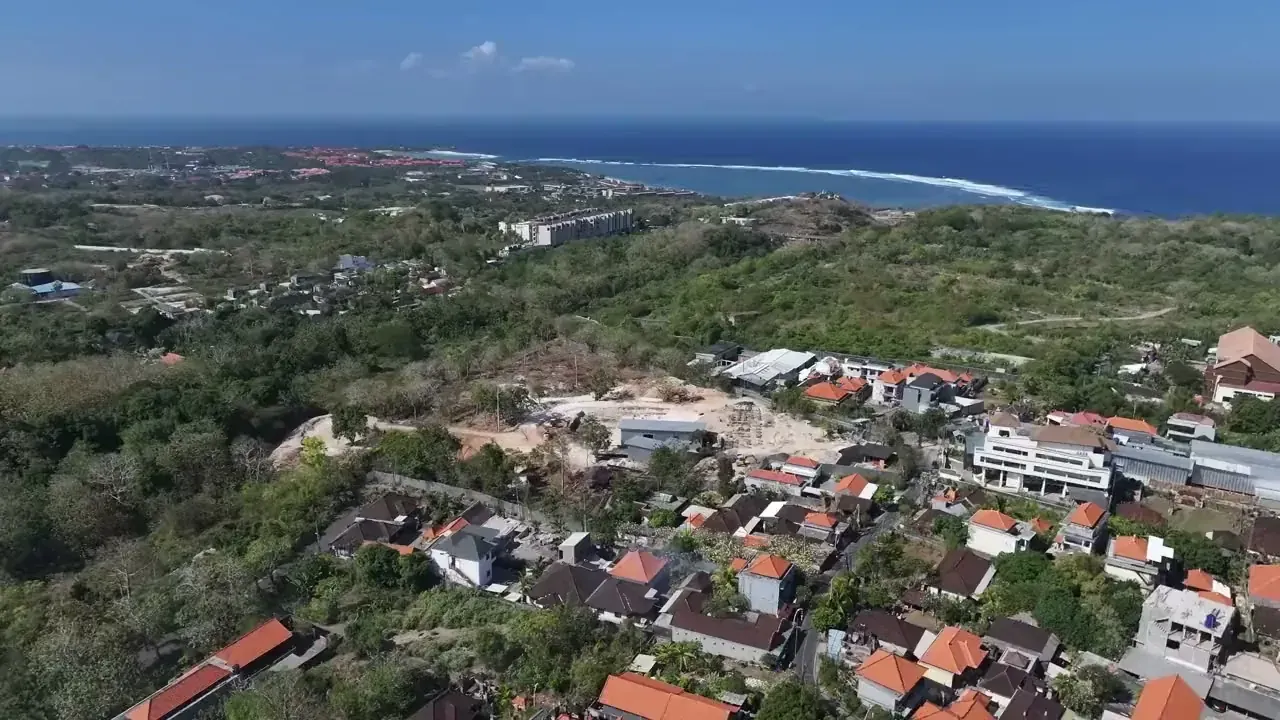
This is why we point buyers who want to see operation rather than a projection to Black Rock, a completed complex of three barnhouse villas in Ungasan that has been operating since August 2024. The available unit, Villa #2, is run day to day by a professional management company and is already live on the major booking platforms.
Frequently asked questions
What rental income does a Bali villa earn?
It depends on the specific unit, its location and category, the operator and the terms of the agreement. A reliable answer is a calculation for that unit, net of all costs, with its assumptions named and a less favourable scenario alongside, not a single headline figure.
How does a rental pool work at HQC properties?
At every HQC property except Aravita, income from all rooms in one category is aggregated, operating costs are deducted and the result is divided by the number of units. Your income follows the performance of the category rather than of your own unit.
Can I use my villa myself and still earn rental income?
Yes, within the terms of the property. At HQC the general rule is up to 30 days per year of owner use, with the owner covering the costs of the stay; separate terms apply at Aravita. Owner nights are nights the unit is not sold, so the forecast should reflect them.
What do occupancy, ADR and RevPAR mean?
Occupancy is rooms sold divided by rooms available, ADR is room revenue divided by rooms sold, and RevPAR is room revenue divided by rooms available, as the STR glossary defines them. For a villa, revenue is the number of nights sold multiplied by the average rate those nights achieved.
Which taxes apply to villa rental income in Bali?
Accommodation services, villas included, fall under the regional PBJT tax, which the guest bears and the business providing the service accounts for. Income tax is a separate question that depends on how the income is earned and the structure you own through, so confirm it with a tax adviser in Indonesia and at home.
Why should a forecast include a less favourable scenario?
Because occupancy and nightly rates move with the season, the market and the operator. Seeing the result with weaker assumptions shows how sensitive the forecast is and whether the investment still makes sense to you if conditions are less kind.
To see how these assumptions apply to a specific residence, talk to the HQC team and ask for the calculation for the unit you are considering.
Continue reading
Bali vs Phuket vs Dubai: Buying Property Compared

Selling a Bali Leasehold: How Resale Works
